In Cardiff-by-the-Sea, "Walkable to the Beach" Runs Through One Crossing
September 10, 2026
September 10, 2026
Stand on one of the composer-named streets in Cardiff's hillside neighborhood, the kind of listing photo that shows a sliver of ocean between two rooflines, and the sand looks close enough to touch. The listing agent will tell you the beach is a ten-minute walk. On paper, measured as the crow flies, that is often true. On foot, it is not quite the whole story, because between that street and the water sits a set of active railroad tracks and Coast Highway 101, and there is exactly one place nearby where a pedestrian can cross both safely: Chesterfield Drive.
That single crossing point is the detail that separates a marketing claim from a daily routine, and it is also the detail that explains why two streets ten minutes apart in the same zip code can carry very different price tags for reasons that have nothing to do with square footage.
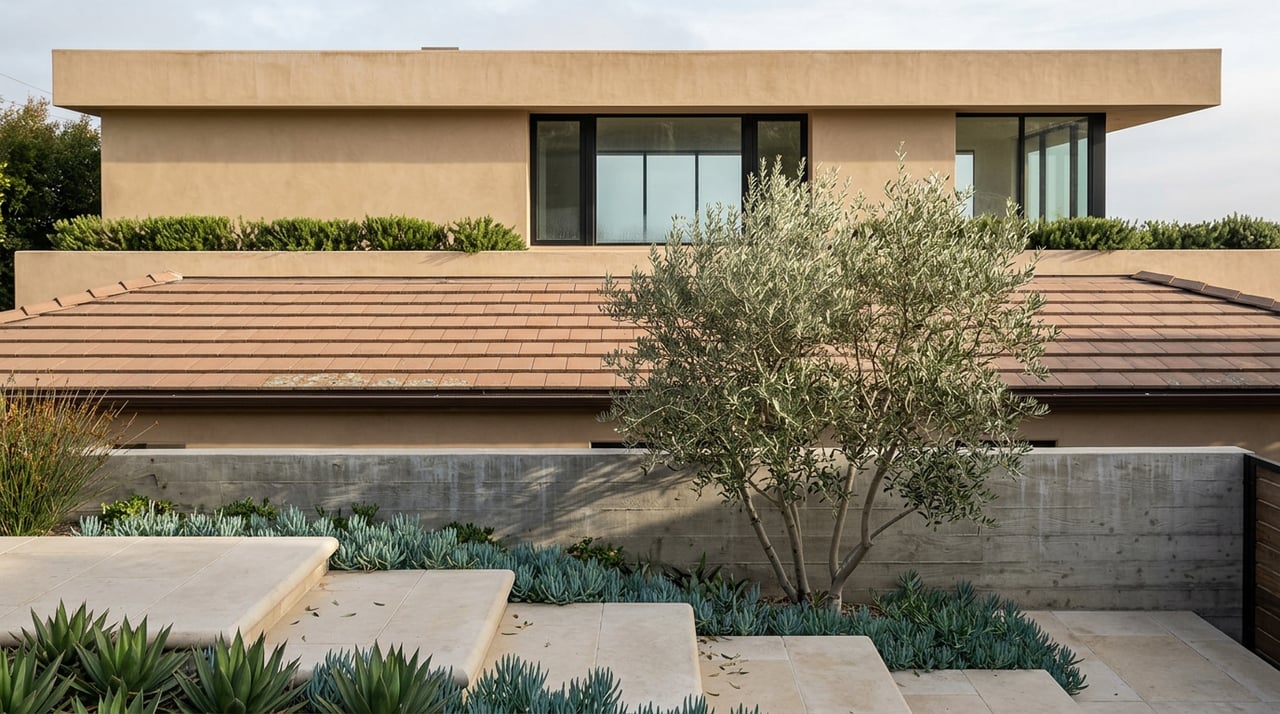
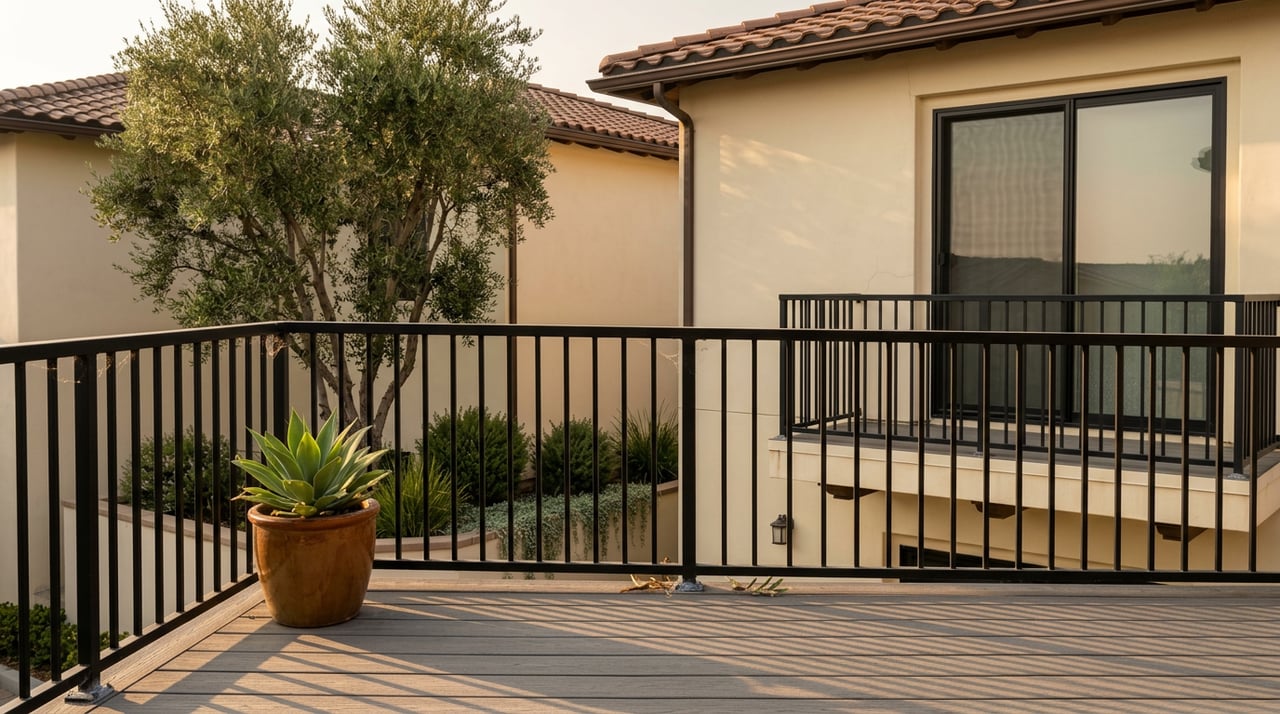
Cardiff-by-the-Sea sits at the southern end of Encinitas, wedged between the city to the north and the San Elijo Lagoon to the south, and it keeps its own zip code, 92007, along with a look that reads differently from the rest of Encinitas. The hillside neighborhoods west of Interstate 5, known locally as the Composer District and the Walking District, are built on terraced lots with floor plans that push living space and decks to the upper level specifically to clear the neighboring rooflines and pull in a slice of Pacific view.
Getting from those streets to the sand means crossing the tracks and the highway, and Chesterfield Drive at San Elijo Avenue is the crossing residents actually use. It matters for two reasons that rarely show up in a listing description. First, distance to that specific crossing, not distance to the beach in a straight line, is what determines whether a walk to the water is a five-minute stroll or a longer loop around. Second, that crossing carries a livability bonus that has nothing to do with beach access at all.
In April 2019, the half-mile stretch of track through the Chesterfield crossing became Encinitas's first federally designated quiet zone, the result of a multi-year project that added crossing gates, lights, and other safety infrastructure so that train engineers are no longer required to sound the horn as they approach. The upgrade was funded through a combination of a roughly six-million-dollar SANDAG budget and city funds of about $770,000, on top of the double-tracking and bridge work that had already reshaped that stretch of the coastal rail corridor.
What that means for a buyer standing on a Composer District street: the same proximity that makes the crossing useful for reaching the beach also means the same homes get the benefit of a rail line that runs without a horn blast at every pass, twenty-four hours a day. That is a real, quantifiable difference in daily life that a walk score or a distance-to-beach number does not capture, and it is specific to this stretch of track. It does not apply uniformly across every crossing in Encinitas, and it is not something a buyer can assume just because a home sits "near the tracks."
West of the 5, the Composer District and the Walking District share a beach and a rail line, but they are not built the same way. The Composer District runs along winding streets named for Bach, Chopin, Mozart, Verdi, Rossini, Liszt, Rubenstein, Haydn, and Vivaldi, laid out on hillside lots that curve with the topography and offer a mix of architectural styles. The Walking District, by contrast, sits on a more conventional grid and includes a higher share of attached twin-home construction, which tends to open the door at a lower price point than the detached hillside product next door.
East of the freeway, the calculation changes again. Sandy Point is a gated community at the southern edge of the city, close to the San Elijo Lagoon Ecological Reserve, where a homeowners association fee covers a pool, spa, clubhouse, and the gated entrance itself. Nearby pockets like Ocean Crest Estates and Cardiff Acres sit at a similar distance from the water and carry a similar suburban feel, without the gate or the dues. Park Place and other condo or townhome developments offer the lowest entry point in the zip code, trading square footage and privacy for a lower down payment.
None of this shows up as a line item in a median price. It shows up when a buyer compares two homes at similar price points and finds one has a monthly HOA bill and a clubhouse, and the other has no HOA at all but was last remodeled sometime before the current owner bought it.
| Location | What you're actually buying | |
|---|---|---|
| Composer District | West of I-5, hillside | Winding streets, partial ocean views, mostly detached, no HOA, older housing stock |
| Walking District | West of I-5, grid layout | Closer to town center, more attached twin-homes, shorter walk to Chesterfield crossing |
| Sandy Point | East of I-5, gated | HOA dues, pool/spa/clubhouse, proximity to the lagoon reserve, no beach walkability |
| Ocean Crest Estates / Cardiff Acres | East of I-5 | Similar distance from beach as Sandy Point, no gate, no HOA package |
| Park Place / condo stock | Mixed | Lowest entry price, shared amenities, least privacy |
There is also essentially no vacant land left to build on in Cardiff. Buyers who want a fully updated interior with a modern floor plan are largely choosing between paying a premium for one of the few already-renovated homes or buying an older cottage or twinhome and planning the remodel themselves, which is a different transaction with a different timeline and a different set of contingencies to negotiate.
Anyone shopping Cardiff by median price alone will notice the number moves more than it should for a market this small. In March 2026, Redfin recorded a median sale price of $2.4 million in Cardiff, up 17.6 percent year over year, with homes taking an average of 43 days to sell against 28 closings that month. A separate monthly snapshot later in the same year showed the average Cardiff house price closer to $2 million, down more than a quarter from the year before. Movoto's May 2026 figures put the median list price at $1.79 million, an 18 percent drop from the month prior. Meanwhile, citywide Encinitas data for the three months ending in May 2026 showed a median sale price of $2.2 million, up 8.1 percent year over year, on 185 closed sales, a volume large enough to smooth out month-to-month noise in a way Cardiff's own numbers cannot.
The reason for the swing is not a market in chaos. Cardiff sells somewhere in the range of two to four dozen homes in a typical month. When that small sample happens to include a run of ocean-view Composer District sales, the median jumps. When it leans toward attached Walking District product or a Sandy Point unit, it drops. The headline number for any given month is really telling you which pocket of Cardiff happened to transact, not what any specific street is worth.
That is the practical takeaway for anyone comparing homes here: the citywide or neighborhood median is the wrong unit to shop by. The right unit is the specific street, its distance to the Chesterfield crossing, whether it carries an HOA, and whether it has already been updated or is priced as a renovation project.
Is every home in Cardiff inside the coastal zone? Much of the neighborhood falls under California Coastal Commission review for exterior changes, and height limits are enforced specifically to preserve ocean sightlines for neighboring properties, so a straightforward-looking remodel can carry a longer permitting timeline than it would elsewhere in the county.
Does the quiet zone cover the whole neighborhood? No. It is a specific half-mile stretch centered on the Chesterfield crossing. Homes outside that boundary still hear the horn at other crossings along the same line.
Is Sandy Point actually walkable to the beach? Not in the way the Composer or Walking District is. Its value proposition runs through the gated HOA package and lagoon proximity rather than a beach walk.
Cardiff rewards buyers who look past the zip code and the median and ask which specific street they're actually comparing. If you want a walk-through of what a particular pocket, Composer District, Walking District, or Sandy Point, is trading off against another, Amy Jensen can pull the block-level comps and talk you through the crossing, the HOA math, and the renovation math before you write an offer. Schedule a free consultation to get the comparison that actually matches how you'll live in the home, not just what the median says it's worth.
Stay up to date on the latest real estate trends.
Get assistance in determining current property value, crafting a competitive offer, writing and negotiating a contract, and much more. Contact Amy today.