ADU Rules in Encinitas: What Local Owners Should Know
January 15, 2026
January 15, 2026
Thinking about adding a backyard home to your Encinitas property, but not sure where to begin? You’re not alone. ADUs promise flexible space and potential income, yet coastal rules, permits, and design choices can feel overwhelming. In this guide, you’ll learn the essentials: what you can build, how Encinitas and state rules work together, what to expect with coastal permits, timelines, costs, rental considerations, and a practical checklist to get started. Let’s dive in.
California made ADUs easier to approve under state law. Cities must use a ministerial review for ADUs that meet objective standards, which means no discretionary hearings. The state also limits what local governments can require for things like parking and owner-occupancy.
To understand the foundation, start with the state’s overview in the state ADU guidance from HCD and the key statute, Government Code section 65852.2. Junior ADUs, or JADUs, are smaller units created within an existing home and are governed by Government Code section 65852.22. These laws set the floor for what every city, including Encinitas, must allow.
Encinitas follows state law and applies local, objective standards for size, height, setbacks, design, and other development controls. The exact numbers vary by zoning and site conditions, so confirm current standards with the City of Encinitas Planning Division. Expect that conversions of existing space often face fewer setback issues than new detached units.
A big local factor is the Coastal Zone, which covers much of Encinitas. Coastal policies can influence feasibility, especially near bluffs, steep slopes, or protected resources. Some projects may need a Coastal Development Permit. Review the Coastal Commission’s Coastal Development Permit guidance and coordinate early with city planning if your property is in the coastal overlay.
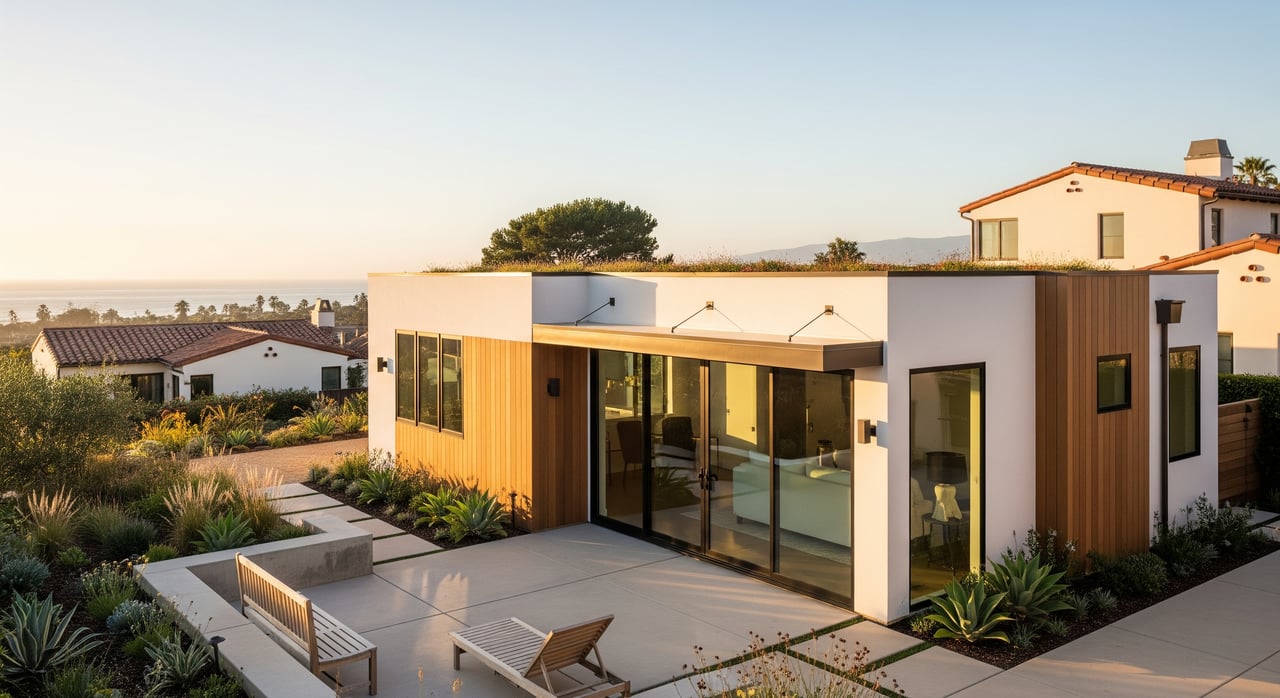
A separate structure in your yard offers the most privacy and design flexibility. It typically triggers more site planning, including setbacks, height limits, and utility connections. Pay close attention to lot coverage and floor-area limits.
An addition to the main home can be a good middle ground. You get new square footage with more design control than a conversion. Plan around existing setbacks and architectural compatibility requirements.
Converting a garage, accessory structure, or interior space is often the most cost‑efficient path. You still need to meet building code for safety, egress, and utilities. Parking rules can be more favorable for conversions under state law.
A JADU is created within the existing single-family home and is limited to a smaller size under state law. It has distinct requirements from a full ADU. JADUs can be an accessible option when your lot or budget is tight.
Encinitas is a coastal city, so coastal considerations can shape design and timelines. Properties near coastal bluffs may face additional setbacks or geotechnical reporting. Projects that affect public access, visual resources, or sensitive habitats are more likely to require closer review.
If you are in the Coastal Zone, clarify upfront whether you need a coastal permit and factor the review time into your plan. Coastal review can extend timelines, so early coordination with city staff is key.
State law reduces when cities can require new off-street parking for ADUs. For example, parking is generally not required if your property is within a half mile of public transit or if you convert an existing garage. Even when parking is required, tandem spaces on the same driveway are often allowed.
Setback and height rules depend on your zoning and whether the ADU is detached or a conversion. Conversions typically face fewer setback hurdles, since the structure already exists. For utilities, new detached units may need separate meters or upgraded connections. Plan for sewer and water capacity checks early.
Ministerial ADUs that satisfy objective standards are typically approved faster than discretionary projects. Many owners see approvals in weeks to a few months for complete, compliant applications. If your property needs a coastal permit, variances, environmental review, or geotechnical reports, expect a longer process that can extend several months or more.
Costs vary widely by project type and site conditions. Conversion ADUs are usually less expensive than new detached builds. Steep slopes, bluff setbacks, and major utility work can push costs higher.
Plan for permitting and development fees that depend on your scope. After completion, the new construction portion is generally added to your assessed value for property tax purposes. Expect an increase in annual taxes tied to the ADU improvement.
Owners typically use one or a mix of the following:
Lenders differ on how they count projected ADU rent for qualifying. Some use a portion of expected rent or require a lease history. Contact your lender early to understand requirements.
ADUs work well for multigenerational living, long-term rentals, or flexible space like a studio or office. If you are considering short-term rentals, know that local governments can regulate them. Encinitas has its own short-term rental policies, so verify what is allowed for ADUs before you commit to a business plan.
If you plan to rent the unit, familiarize yourself with statewide tenancy rules. Some statewide protections, like just-cause and rent cap laws, may apply depending on the property type and unit classification. When in doubt, consult with a housing professional or attorney.
A well-designed, legally permitted ADU can improve marketability. Buyers often value the flexibility and potential income. The exact value impact depends on design quality, legal status, rental potential, and neighborhood norms.
Appraisers and lenders look closely at permits, quality of construction, and comparable sales. If you intend to use rental income, ask your lender how they underwrite ADUs so you can align your design and documentation with their criteria.
An ADU can be a smart way to create flexible space, support family, or offset costs with rent. Success comes from aligning your design with state rules and Encinitas standards, planning for coastal requirements, and building a realistic budget and timeline. With the right team and preparation, your ADU can add lasting function and value.
If you are weighing an ADU as part of a purchase or prepping to sell a home with an ADU, connect with a local advisor who understands the nuances of Encinitas and the coast. For tailored guidance and a strategy that fits your goals, schedule a conversation with Amy Jensen.
Stay up to date on the latest real estate trends.
Get assistance in determining current property value, crafting a competitive offer, writing and negotiating a contract, and much more. Contact Amy today.