If you are planning an accessory dwelling unit in San Marcos, the right financing plan will set the tone for your budget, timeline, and long-term returns. This guide walks you through costs, loan options, how to qualify, and the local process so you can move forward with clarity.
Why ADUs Make Sense Locally
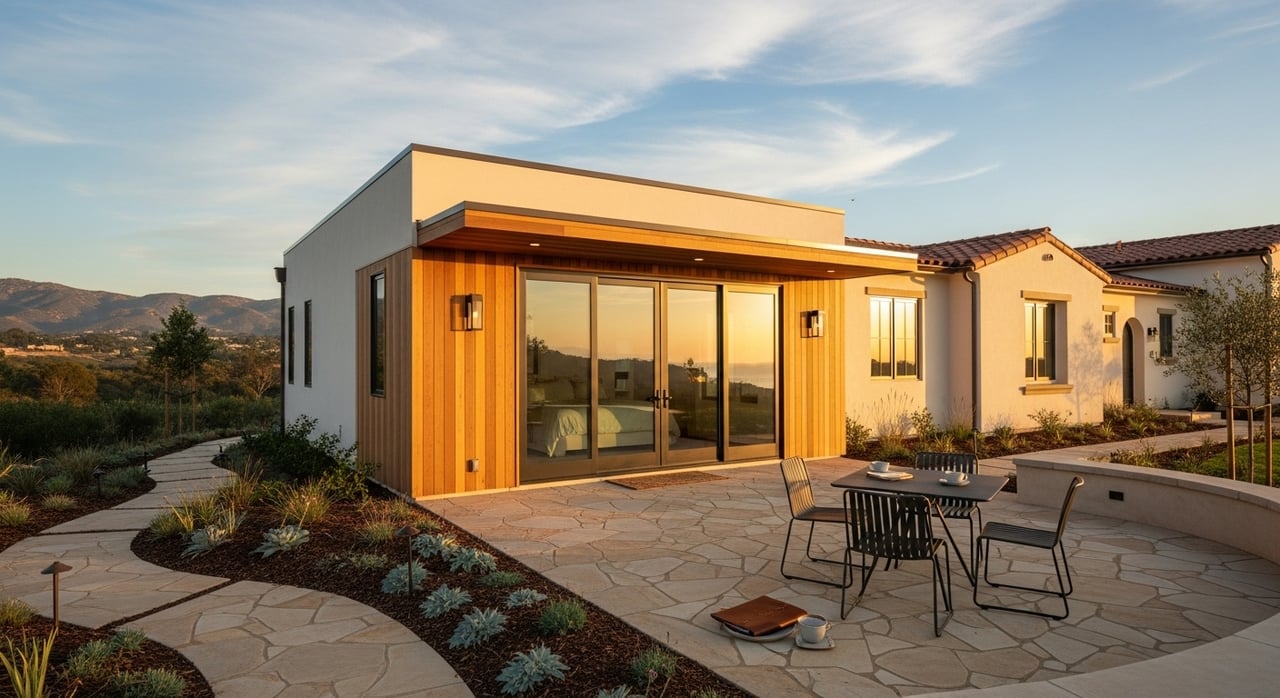
ADUs are popular in North County for good reasons. Homeowners build them to create space for aging parents, generate rental income, house adult children, or add a flexible home office. San Marcos supports ADUs with its Permit-Ready ADU program, which offers pre-approved, one-story detached plans to reduce design time and soft costs. You still need site-specific details and building permits, but this can streamline your path from idea to permit via the City’s PRADU program.
At the same time, financing often makes or breaks the project. In this guide you will find practical budgets, loan comparisons, how to use rental income to qualify, and a local step-by-step timeline.
Budget, Costs, and ROI
Before you choose a loan, build a realistic budget. Separate hard costs from soft costs, then test your monthly payment against projected rent or family-use savings.
Hard vs. soft costs
Hard costs typically include:
- Site work, grading, foundation, framing, roofing, windows, doors
- Electrical, plumbing, HVAC, finishes, appliances
- Utility trenching and panel upgrades
Soft costs typically include:
- Design, structural and energy reports, and plan sets
- Permits, impact fees, and inspections
- Title, loan, and closing costs
Regional estimates in San Diego County often range from roughly 200,000 to 450,000 or more, with many projects falling between 300 to 600 dollars per square foot depending on size, finishes, and utility connections. Garage conversions and junior ADUs trend lower; custom detached units trend higher according to regional summaries. Expect higher totals if you need panel upgrades, sewer extensions, complex grading, or hillside work.
City and county fee policies also affect total soft costs. Some jurisdictions previously offered fee relief that has expired. In San Diego County, a time-limited fee waiver ended in January 2024, and current fees vary by jurisdiction. Always verify the latest fee schedule with your city or county before finalizing your budget review county ADU information.
Payback and rent scenarios
Model monthly payment versus expected rent or household savings.
- If you plan to rent long term, use conservative market rent estimates and set aside a vacancy and maintenance factor.
- If the ADU will house family, compare costs to assisted living, childcare, or commuting and office expenses.
- For short-term rentals, validate local rules and underwriting limits. Many lenders qualify using long-term rent estimates, not short-term rental income.
Contingency and cash reserves
Build a 10 to 20 percent contingency into your budget for unknowns like utility coordination or material price changes. Plan for interest-only payments and carrying costs during construction. Lenders may also require cash reserves after closing, especially if rental income is part of qualifying.
Compare Financing Options
There is no one-size solution. Match the loan to your equity, timeline, and whether you need funds during construction.
Home equity loans and HELOCs
- Best for: Owners with strong equity who want quick access to funds and flexible draws.
- How it works: A HELOC is a revolving line with interest-only draws during the draw period; a home equity loan is a fixed-rate second mortgage with a lump sum.
- Considerations: Total available credit depends on home value, existing mortgage balance, and lender loan-to-value limits. Rates are often variable for HELOCs. Equity products can close faster than construction loans learn general mechanics.
Cash-out refinance
- Best for: Owners with significant equity who want one fixed, first-lien payment.
- How it works: Replaces your current mortgage with a larger one and returns cash at closing.
- Considerations: Weigh the new rate and term against your current mortgage. A refi can make sense if it lowers your blended cost or if rates are favorable. If your current rate is much lower, a second-lien option might preserve savings see cash-out considerations.
Construction and renovation loans
- Best for: Detached ADUs or conversions that require milestone draws tied to permits and inspections.
- How it works: Construction-to-permanent loans fund the build with interest-only draws, then convert to a fixed mortgage at completion. Renovation loans, like FHA 203(k) and Fannie Mae HomeStyle Renovation, can finance ADU work using the after-improved value. These products require detailed plans, budgets, and inspections review FHA 203(k) and Fannie Mae construction-to-permanent guidance.
- Considerations: You will provide final plans, a signed contractor agreement, draw schedules, and allow appraisers to value the project as completed. Allow time to assemble documents and obtain permits before the first draw see construction loan basics.
ADU-focused loan products
Some lenders offer ADU-targeted programs or conventional renovation options that recognize accessory units. Fannie Mae’s Selling Guide acknowledges ADUs and allows certain products to be used for ADU construction and renovation, with specific rental income rules by product see Fannie ADU guidance and HomeStyle Renovation details.
Cash, partners, and other sources
- Savings or portfolio loans can simplify approval but concentrate risk.
- Partners or equity-share arrangements add complexity. Put terms in writing and plan for exit events.
- Hard-money or contractor financing can bridge gaps but often carries higher costs. Treat these as last-resort solutions overview of alternatives.
Qualify and Structure Your Loan
Getting pre-approved early helps you design to a budget and avoid mid-project surprises.
Equity, credit, and debt-to-income
Lenders look at your loan-to-value ratio, credit score, income stability, and debt-to-income. Strong equity and credit can improve pricing and flexibility on draw schedules. Pre-qualification will show how loan size and rate options change across products.
Using projected rental income
Policy now allows more borrowers to count ADU rent. FHA permits lenders to use up to 75 percent of existing ADU rent for qualifying, and 50 percent of projected rent for a new ADU financed under 203(k), subject to documentation and appraisal requirements see HUD policy update. Conventional paths may also allow rental income from a one-unit with an accessory unit under specific rules and documentation Fannie ADU rules.
Expect reserve requirements if you use rental income, often at least two months of principal, interest, taxes, and insurance after closing, depending on the program and lender overlays illustrative lender guidance.
Rate types, terms, and draw schedules
- Rate types: Fixed rates offer stability after completion. Construction periods are often interest-only. HELOCs are usually variable-rate.
- Terms: Renovation and construction-to-perm loans convert to a permanent mortgage when you receive a certificate of occupancy.
- Draws: Funds are released in stages after inspections. Align your contractor’s schedule with lender draw milestones to keep subs paid and work moving see construction-to-perm overview.
Local Process and Timeline
In North County, most ADUs run 10 to 16 months from planning to occupancy, depending on design, permits, utilities, and construction schedules regional timeline context. Utility coordination can be a real variable, so build time into your plan and draw schedule utility delay discussion.
Feasibility and pre-approval
- Confirm basic setbacks, lot coverage, and parking rules. In San Marcos, the PRADU program can shorten design and review for certain detached layouts PRADU details.
- Order a site review and talk to a lender about budget ranges and the right loan structure.
- If you hope to offset costs with rent, gather rental comps and discuss which programs count projected rent.
Design, bids, and appraisal
- Choose PRADU plans or custom design. Secure at least two to three contractor bids with line-item budgets.
- Your lender will need signed contracts, final plans, permits or ready-to-issue status, and an appraiser’s as-completed valuation. Renovation loans may also require a rent schedule if income is used.
Permits, inspections, and draws
- Submit plans and track city comments. California’s ADU law sets ministerial review standards, but resubmittals and queues still take time.
- Coordinate inspection timing with your lender’s draw releases. Keep utilities and trenching on the critical path to prevent idle crews.
- Confirm current fees with your jurisdiction. County policies change, and fee waivers may not apply in your city county reference.
Build, lease-up, and stabilization
- During construction, expect interest-only payments on drawn funds.
- After final inspection and certificate of occupancy, construction-to-perm loans convert to a fixed mortgage.
- For rentals, plan lease-up time, professional photos, and marketing before completion. Keep documentation ready for lenders if refinancing after stabilization.
Grants and Local Programs to Explore
- CalHFA ADU Grant: Up to 40,000 toward predevelopment and non-recurring closing costs like plans, permits, and impact fees. Availability is limited and you must apply through participating lenders. Check current status and rules before you count on the funds CalHFA ADU Grant.
- San Diego Housing Commission ADU Finance Program: Construction-to-perm loans up to 250,000 for eligible City of San Diego homeowners, with income and rent restrictions. San Marcos is a separate jurisdiction, so confirm geographic eligibility before applying SDHC program overview.
Appraisal, Taxes, and Insurance
- Appraisal: Lenders often use an as-completed valuation for renovation and construction loans. FHA and Fannie Mae require appraisers to identify ADU characteristics and analyze potential rent when income is used for qualifying HUD appraisal and income policy.
- Property taxes: In California, the assessor typically adds the ADU’s new construction value to your existing Proposition 13 base. This usually triggers a supplemental assessment for the added value, not a full reassessment of your primary home. Confirm specifics with the county assessor assessor ADU guidance example.
- Insurance: Tell your insurer about the project. You may need additional dwelling coverage during construction and landlord or rental endorsements after completion. Lenders often require proof of coverage at closing or conversion see general lender expectations.
Next Steps With a Local Advisor
How a real estate advisor adds value
A local advisor helps you connect the dots:
- Introductions to lenders who regularly finance ADUs, plus vetted designers and builders
- Rental comps to support conservative income models and program selection
- Property selection for ADU potential if you are considering a move to a more ADU-friendly lot
- Resale strategy, including how an ADU can influence buyer demand and valuation
If you want a concise plan, I can help you align design scope, funding, and timing so your ADU pencils out from day one.
Book a consultation
Ready to explore your options and assemble the right team? Schedule a free planning call with Amy Jensen. We will review goals, budget ranges, grants and loan programs, and a step-by-step path from feasibility to stabilization.
FAQs
What does the San Marcos PRADU program include?
- Pre-approved, one-story detached ADU plans intended to reduce design review time and soft costs. You still need site-specific information and building permits San Marcos PRADU.
How much does an ADU cost in the San Diego region?
- Many projects fall between 200,000 and 450,000 or more, often 300 to 600 dollars per square foot depending on size, finishes, and utilities. Get multiple bids for accuracy regional cost overview.
Can I use ADU rental income to qualify for a mortgage?
- Often yes. FHA allows up to 75 percent of existing ADU rent and 50 percent of projected rent under 203(k), with documentation. Conventional paths also exist under specific rules HUD update and Fannie ADU guidance.
What loans cover construction and the permanent mortgage?
- Construction-to-permanent loans fund the build in draws and convert to a long-term mortgage at completion. Renovation loans like FHA 203(k) and Fannie HomeStyle can also work for ADUs Fannie construction-to-perm and 203(k) basics.
Are there grants I can use?
- CalHFA’s ADU Grant offers up to 40,000 for eligible predevelopment and closing costs, subject to availability. City-level programs exist but may not cover San Marcos. Verify current status and geography before applying CalHFA ADU Grant and SDHC program.
How will an ADU affect my property taxes?
- The added value of the ADU is typically assessed and added to your base. It usually triggers a supplemental assessment for the improvement, not a full reassessment of your main house. Confirm with the county assessor assessor guidance.
What documents will my lender ask for?
How long does the process take?
- Many projects run 10 to 16 months from planning to occupancy, depending on design, permits, utilities, and construction. Utility coordination can affect schedules, so build in flexibility timeline context and utility considerations.